11 November 1918: the guns fall silent, and the world that fortnight
At 11 o'clock on the morning of 11 November 1918, Paris time, the armistice signed some six hours earlier in a rail carriage parked in the Compiègne Forest stopped the fighting on the Western Front.
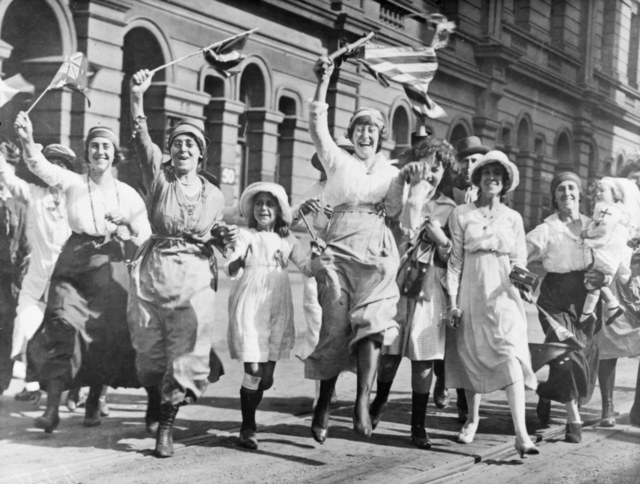
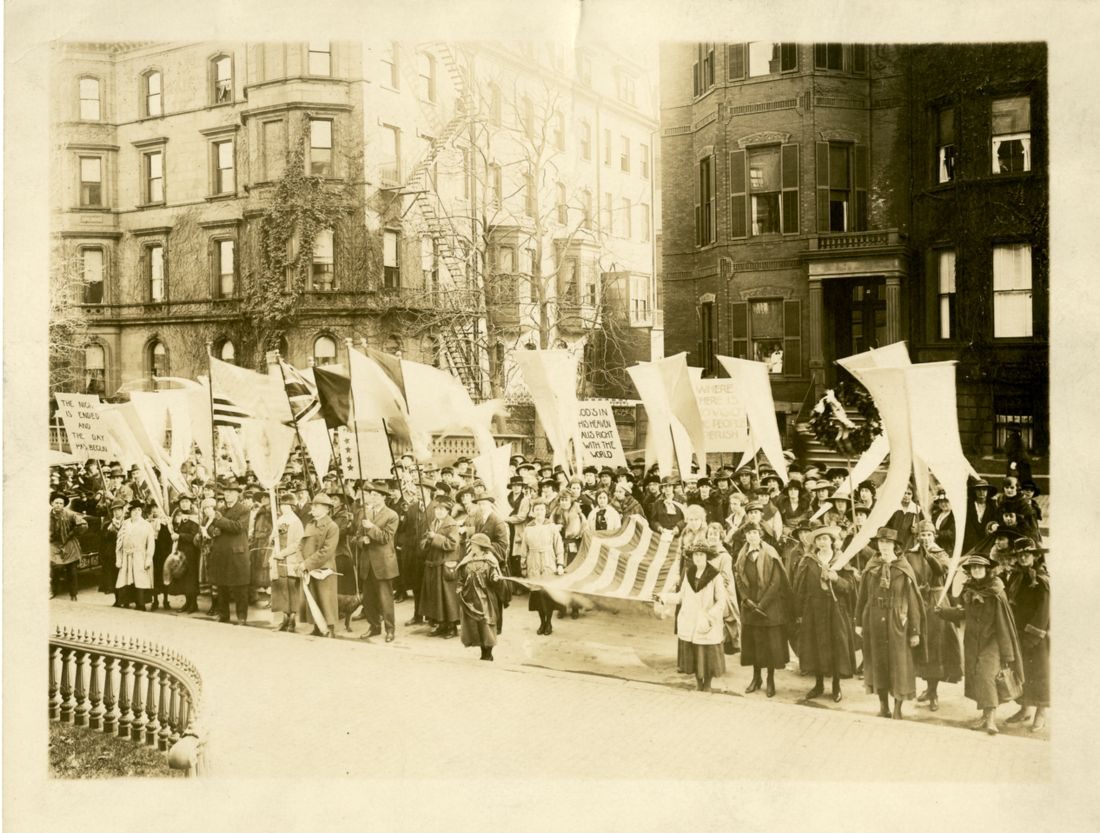
· Australian War Memorial (A03281)Women and children dance down a Sydney street with flags. The Memorial dates the photograph 11 November 1918, but official word of the armistice reached Australia only that evening and the next day was a public holiday, so it may be from 12 November.Copyright expired: public domain, per the Australian War Memorial. · Massachusetts College of Art and Design, via Digital CommonwealthAn Armistice Day march with banners and flags in Boston's Back Bay. The print is in the Massachusetts College of Art and Design's campus-life collection, which lists the Massachusetts Normal Art School as its subject.No known copyright restrictions; no known restrictions on use.
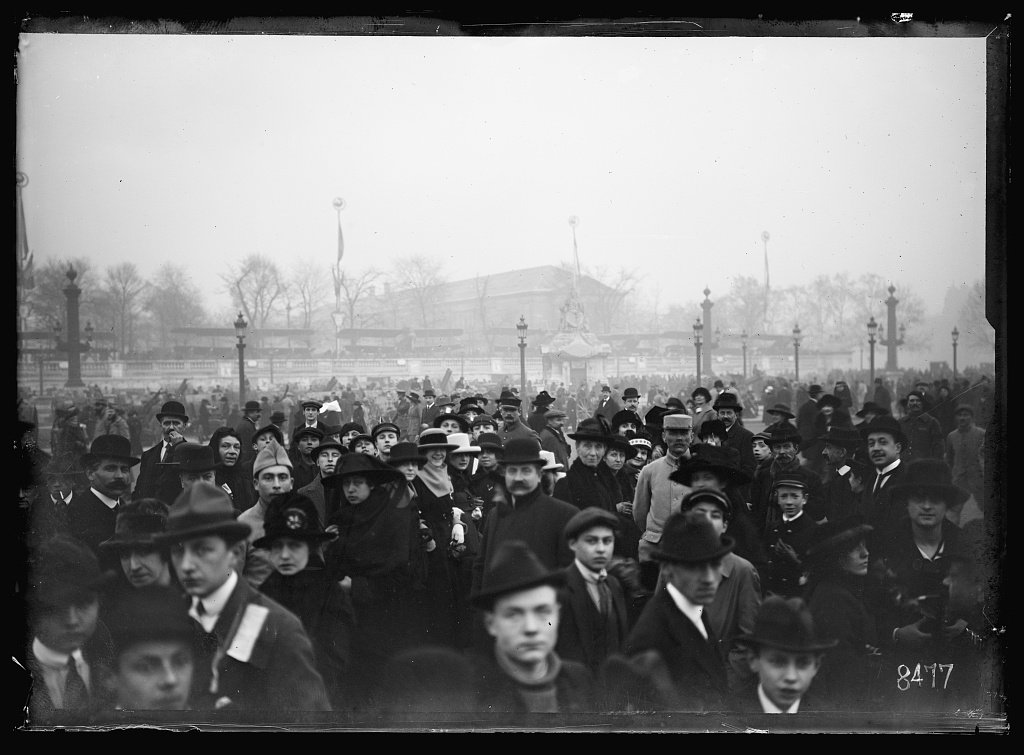
Paris, Sydney and Boston as the news came in. Each picture links to the library or museum that holds it.
How sure we are: events with no label are high confidence. A grey label such as Exact day uncertain says why one detail is less certain; a yellow label such as Sources differ on the date marks a low-confidence event where the sources disagree or are thin. The notes say where. Dates are in the Gregorian calendar; where a country still used another calendar, the notes give the original. How events are checked
The morning the guns stopped
On the Western Front, and at sea.
War & conflictWidely known
Armistice ends fighting on the Western Front
· Compiègne Forest, France · Europe
On 11 November
Agreed in a railway carriage in the Compiègne Forest, the Armistice took effect at 11:00 in the morning, Paris time, on 11 November 1918. Germany had first asked President Wilson for terms based on his Fourteen Points.
Why it is interesting. Troops kept fighting right up to the deadline, and the last day of the war alone cost 2,738 lives.
Notes and dating details
Signed about 5:00 a.m. and in force 11:00 a.m. Paris time on 11 November 1918.
German U-boat campaign against Allied shipping ends
· Atlantic Ocean, North Sea and Mediterranean · At sea
On 11 November
Some details uncertain.
German submarines sank almost 5,000 ships in the campaign, chiefly near Britain and in the Mediterranean, and Germany lost 178 submarines. Convoys and shipbuilding let the Allies keep shipping available.
Why it is interesting. Germany's U-boats sank almost 5,000 ships, but convoys kept Allied shipping from collapsing.
Notes and dating details
The infobox gives 11 November 1918 as the end; the lead says only that the campaign lasted from 1914 to 1918.
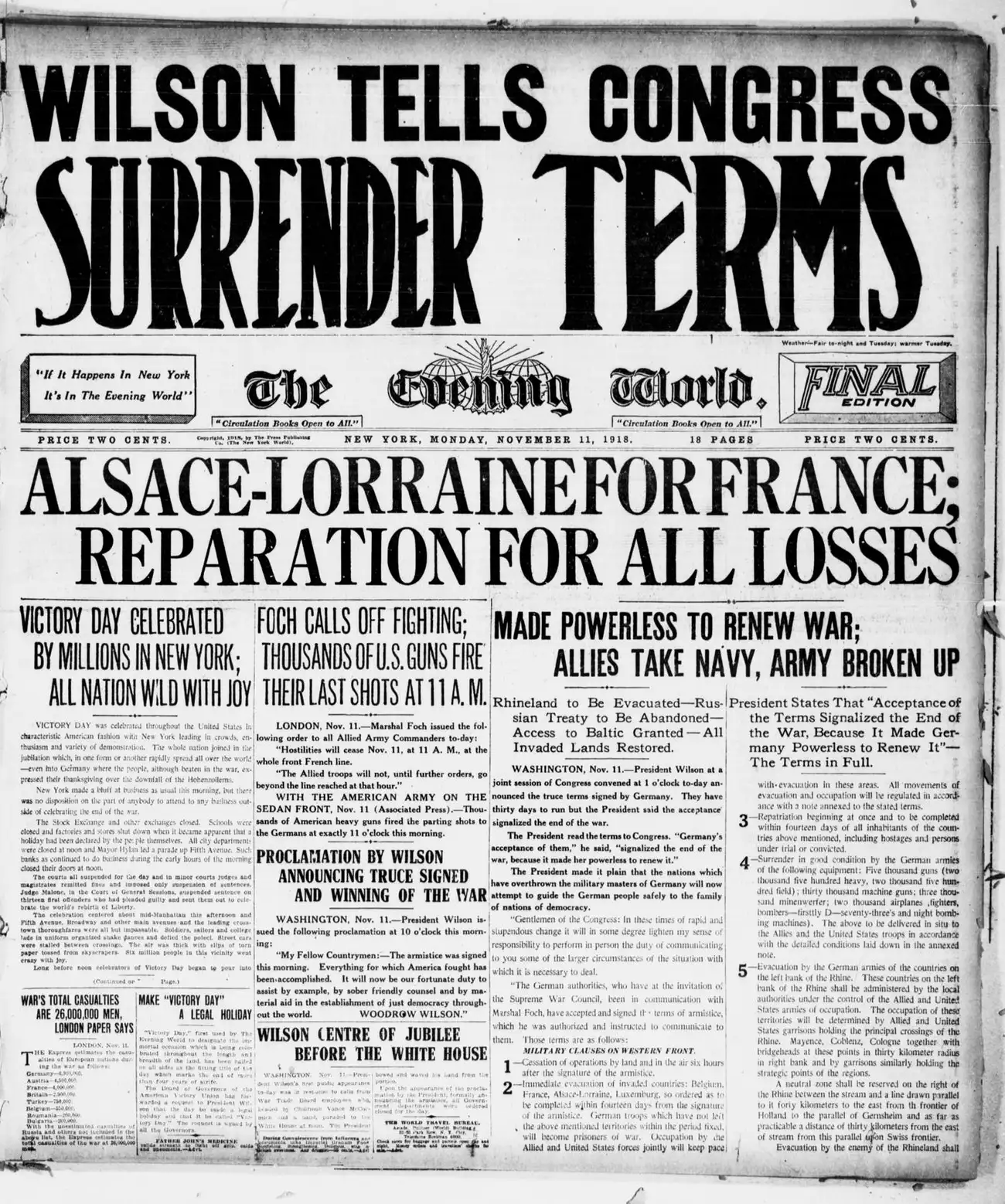
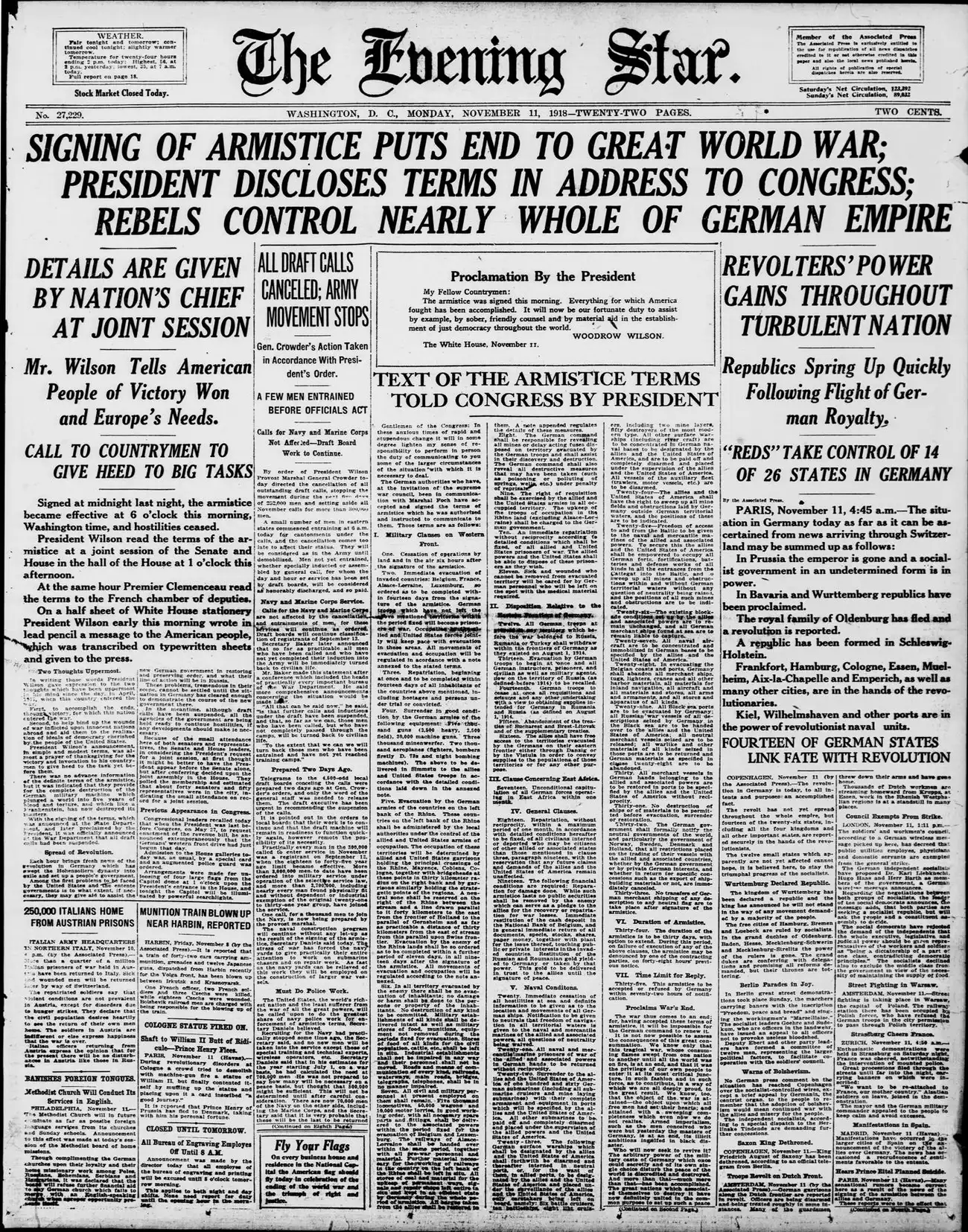
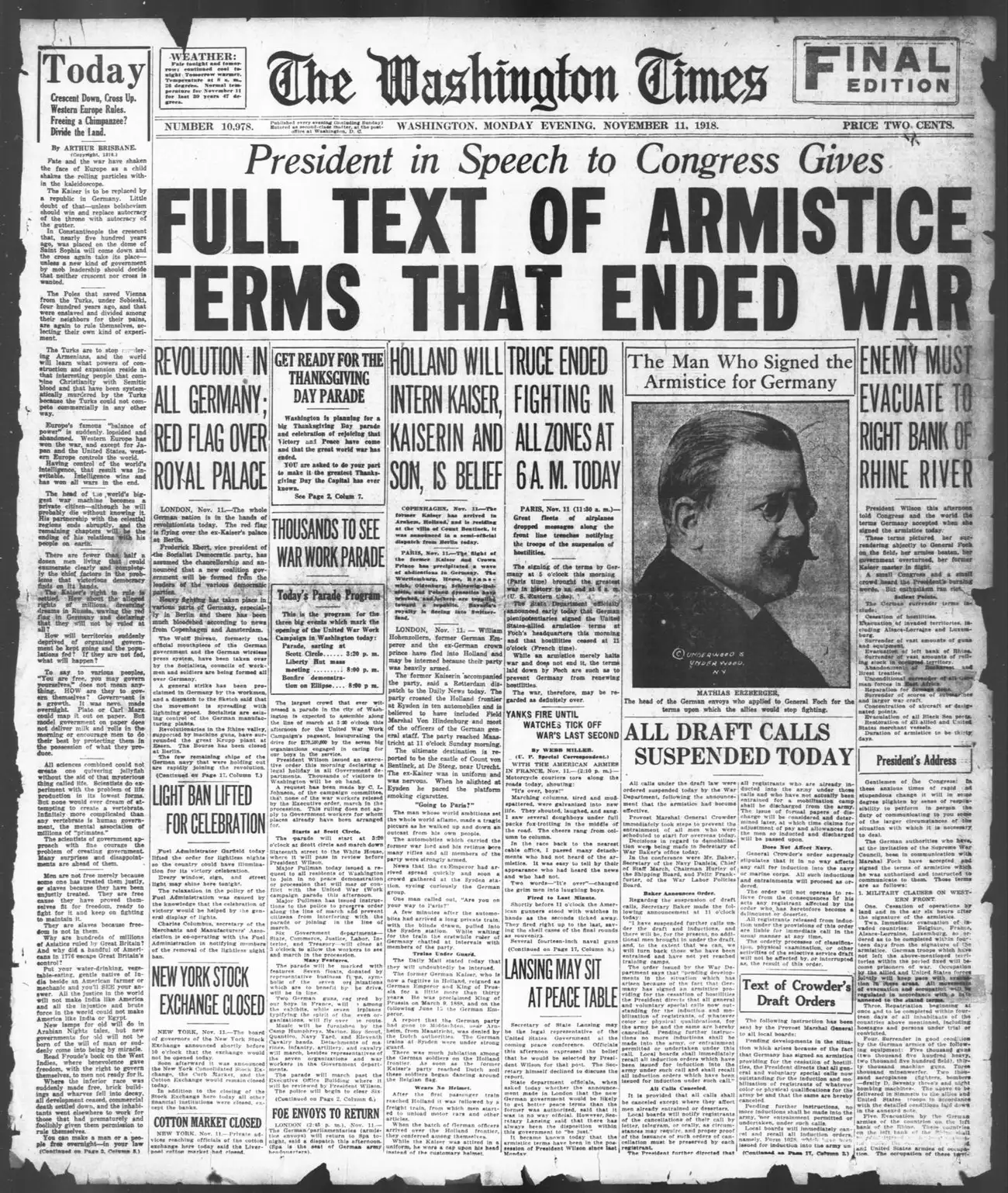
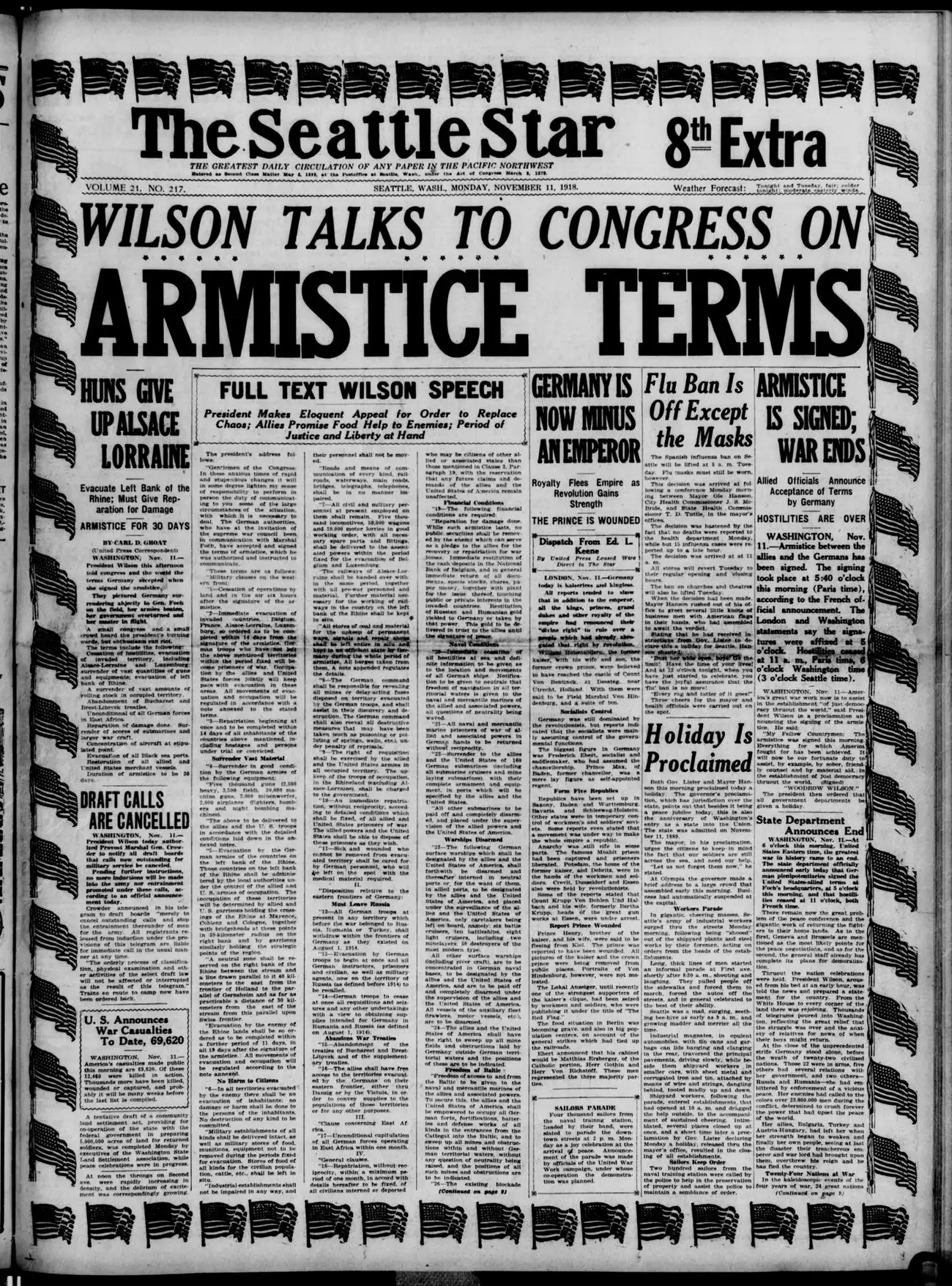
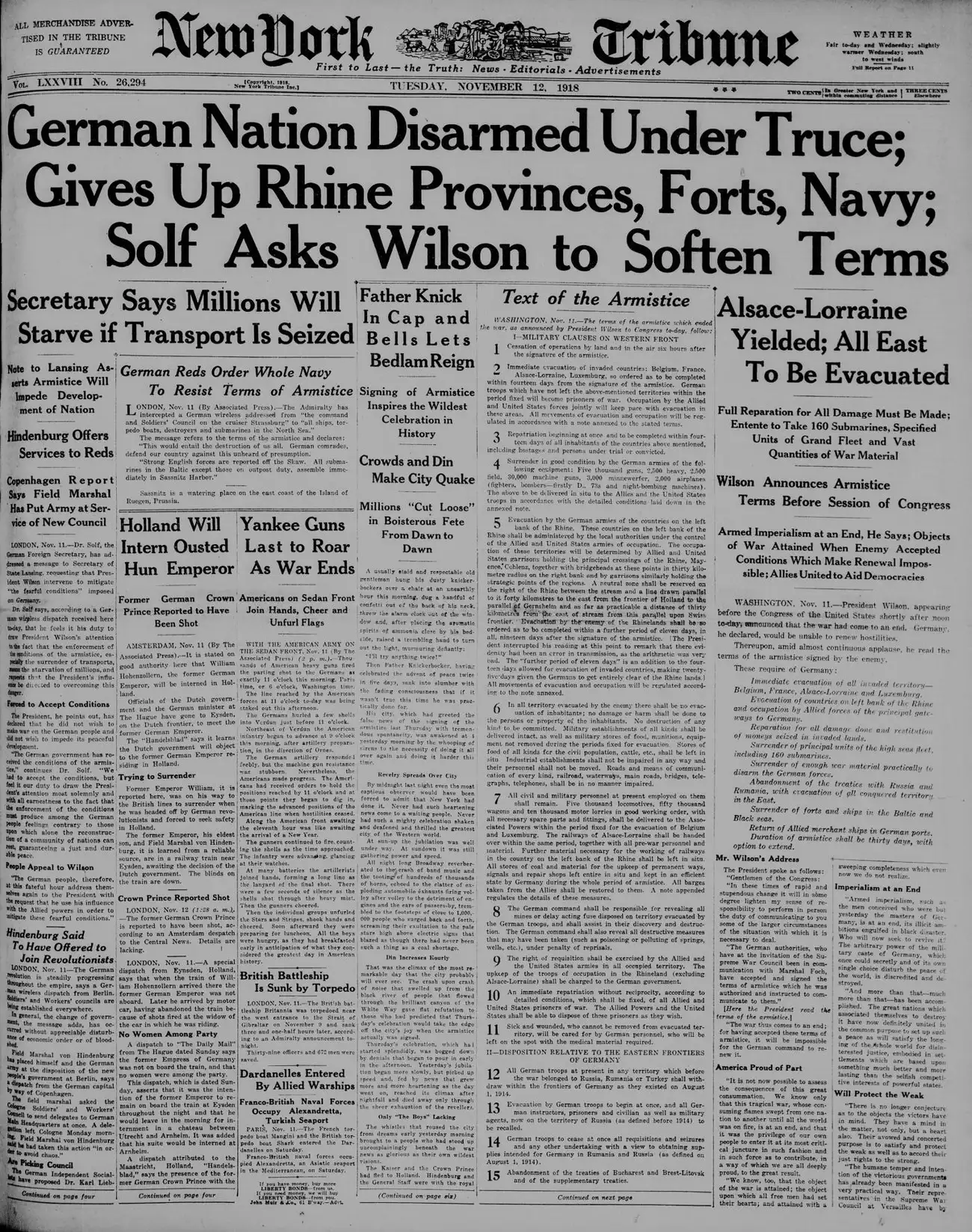
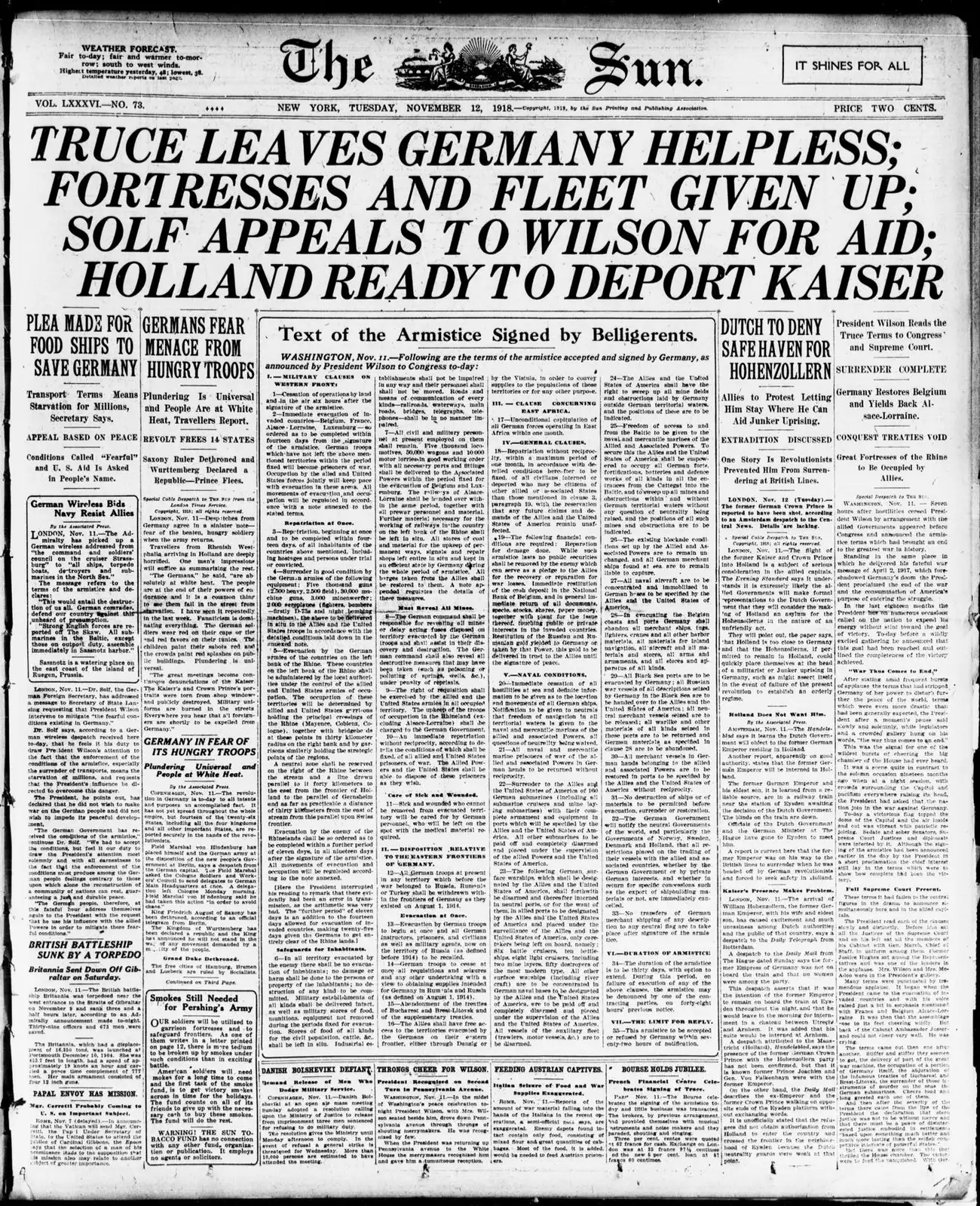
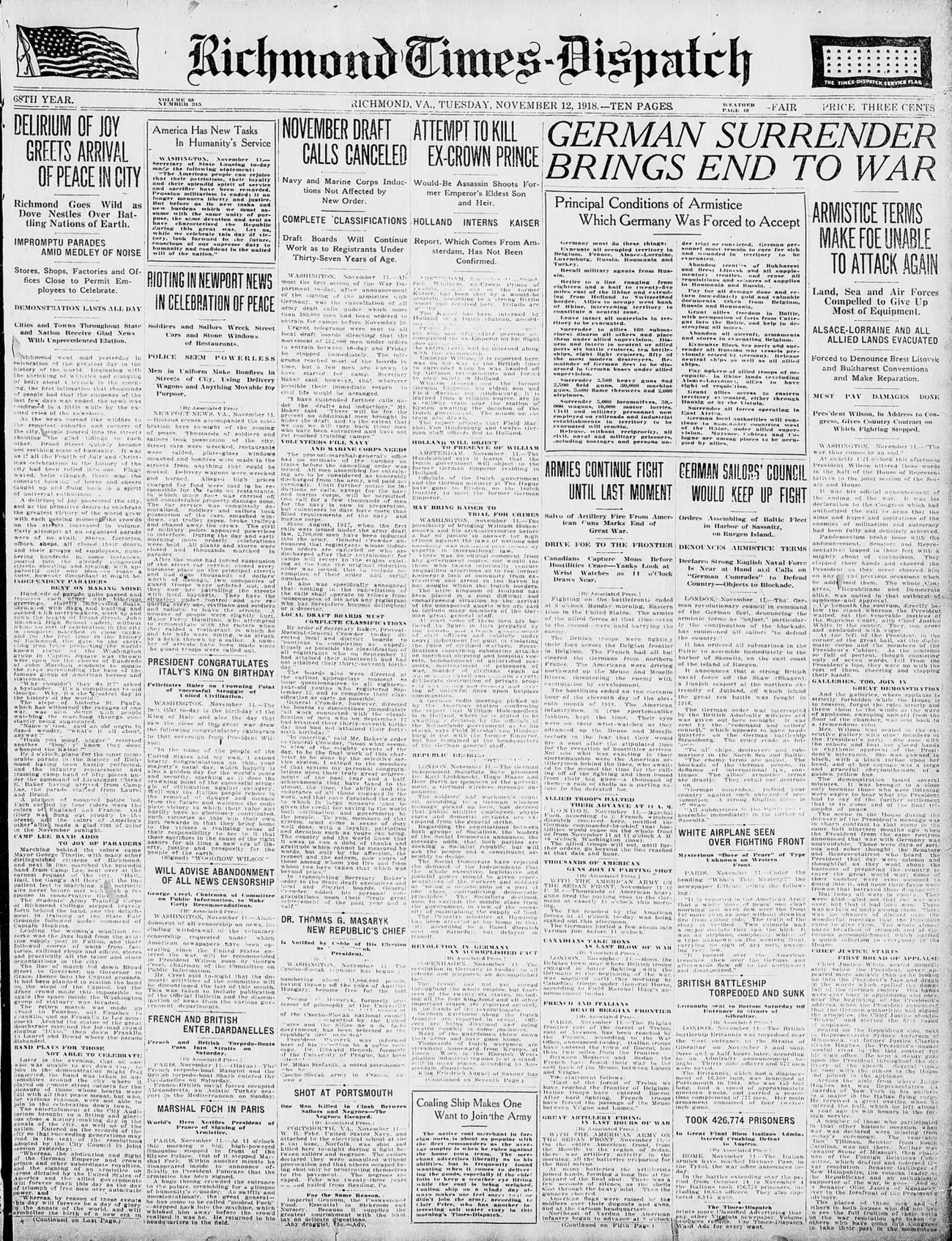
How 7 American newspapers put it on the front page, 11 and 12 November 1918. Headlines typed from the scans; under each, smaller stories from the same page that show everyday life carrying on.
The Evening World
New York · Monday 11 November 1918 · final edition
Rioting in Newport News in Celebration of PeaceSoldiers and sailors in Newport News rampaged on armistice day, wrecking vehicles, raiding restaurants and smashing windows, and police could not stop them. Armistice Day: pause for peace - Christian Science Monitor
Poland regained its independence at the end of World War I as the Second Polish Republic, dated from 11 November 1918. Neighbouring states had partitioned the country at the end of the 18th century.
Why it is interesting. Poland had been partitioned by its neighbours since the end of the 18th century.
Notes and dating details
Day-level date comes from the infobox. Wikidata also lists 1917-01-14, 1947-07-22 and 1989-12-31 for the country item.
Charles I gave up power on 11 November 1918, two years after taking the throne, as Austria-Hungary fell apart. A 1919 Austrian law described him only as the former bearer of the crown.
Spartacus Group becomes the nationwide Spartacus League
· Berlin, Germany · Europe
On 11 November
On 11 November 1918, in the revolution, the group founded by Rosa Luxemburg, Karl Liebknecht and Clara Zetkin reorganised as a non-party national body aiming at a council republic across Germany. It merged into the Communist Party of Germany on 30 December.
Notes and dating details
The reorganisation was on Liebknecht's initiative at the Hotel Excelsior in Berlin on 11 November 1918, according to both the English article's body and German Wikipedia; Wikidata also gives 11 November. The infobox gives the founding as 4 August 1914 (as the International Group) and dissolution as 30 December 1918. Source family: wikimedia.
Victor Adler, an Austrian labour leader trained as a neurologist, founded the Social Democratic Workers' Party of Austria. He became foreign minister in the new Austrian government from 30 October 1918 and died of heart failure in Vienna on 11 November.
Mutiny, abdication and an armistice in Italy, and two poets lost.
War & conflict
Kiel mutiny breaks out
· Kiel, German Empire · Europe
8 days before 11 November
Sources differ on the date.
Sailors of the German High Seas Fleet refused orders to sail out for a final battle against the British Grand Fleet, which they saw as a futile death voyage. Mutineers took over Kiel through workers' and soldiers' councils.
Why it is interesting. Sailors refused to take part in a final fleet battle they called a death voyage, and a revolution followed.
Notes and dating details
Wikidata gives 1918-10. The first refusals were at Wilhelmshaven around 29-30 October 1918 (sources differ by a day); the mutiny at Kiel broke out on 3 November 1918 (infobox 3-11 November).
Austria-Hungary and the Allies sign the Armistice of Villa Giusti
· Villa Giusti, near Padua, Italy · Europe
8 days before 11 November
Signed at a villa outside Padua, the armistice effectively ended the fighting between Austria-Hungary and the Allies, with Italy acting for them. It took effect 24 hours later and covered Austria only.
Why it is interesting. Hungary was not covered; it signed its own separate armistice at Belgrade afterwards.
The English soldier-poet was shot on 4 November 1918 as his unit crossed the Sambre-Oise Canal, aged 25, seven days before the Armistice. Most of his best-known poems, including 'Dulce et Decorum est', appeared after his death.
Why it is interesting. He died almost exactly a week before the Armistice, and most of his famous poems appeared after his death.
Max von Baden announces Kaiser Wilhelm II's abdication
· Berlin, Germany · Europe
2 days before 11 November
Some details uncertain.
On 9 November 1918 the Chancellor declared the abdication on his own, without Wilhelm's knowledge or approval. Germany was proclaimed a republic that afternoon, and Wilhelm left for exile in the Netherlands the next day.
Why it is interesting. The Kaiser was told he had abdicated only after the Chancellor announced it for him.
Notes and dating details
The announcement was made on 9 November 1918; the formal written abdication followed on 28 November 1918. Two dates for the same event.
The Polish-French poet, playwright and art critic died in Paris on 9 November 1918 during the Spanish flu pandemic, two years after being wounded in the war. He is buried at Père Lachaise Cemetery.
Why it is interesting. He is credited with coining the word 'Surrealism' in 1917.
The war's end in the Ottoman lands, Africa and Asia, in date order; the last two are known only to the month or the year.
War & conflict
Middle Eastern theatre of World War I ends
· Middle East and Ottoman lands · Middle East
12 days before 11 November
Date may use an older calendar.
Fighting between the Ottoman Empire and British, Russian and French forces ran from late October 1914 to 30 October 1918, when the Ottomans accepted the Armistice of Mudros. Its four main campaigns included Gallipoli.
Why it is interesting. This theatre spread over more territory than any other of the war.
Notes and dating details
Calendar not stated in source (Ottoman Empire). The infobox start date is 29 October 1914 while the lead gives 30 October 1914; the end date 30 October 1918 is the same in both.
The Committee of Union and Progress, the Young Turk party that had run the Ottoman Empire as a dictatorship since 1913, was dissolved on 5 November 1918, soon after the empire lost World War I.
Notes and dating details
Day from the infobox dissolution field (5 November 1918); the full article puts the party's final congress at 1-5 November 1918, where members voted to abolish it. The infobox short description gives 1889-1919 and the lead says the CUP was active until 1926 (successor groups), so the end date depends on what counts as the party. Calendar: Ottoman civil dating had followed Gregorian day numbers since March 1917, so no conversion applies.
The republic's first flag, adopted on 21 June 1918, was a white crescent and star on red. A draft of a revised flag with blue, red and green stripes won approval on 9 November and was raised over parliament on 7 December.
Notes and dating details
The infobox and lead give 9 November 1918 as the adoption of the tricolour; the body calls it approval of a draft and says the earlier red flag came first on 21 June 1918.
French troops entered the Ottoman capital on 12 November 1918 and British troops followed a day later, under the terms of the Armistice of Mudros. An Allied military administration was set up in early December.
Why it is interesting. The city had not been in other hands since Constantinople fell in 1453.
Notes and dating details
Wikidata gives 1918-11-13, the day the British arrived; the English article gives 12 November 1918 for the first French troops and 4 October 1923 for the last Allied departure, while French Wikipedia dates the start to 13 November and the end to 6 October 1923. Calendar not stated in source (Ottoman Empire).
British imperial forces fought the Ottomans for Ottoman Iraq, from the landing at Fao to protect the oil fields until the fighting there ended in November 1918. They suffered defeat at the siege of Kut and captured Baghdad in March 1917.
Why it is interesting. The siege of Kut was labelled the Allies' worst defeat of the First World War.
Notes and dating details
The body puts the end of the Mesopotamian war at 14 November 1918, about two weeks after the Armistice of Mudros was signed on 30 October; French Wikipedia has the fighting last only until the October armistice, and the English page carries a note about unreliable sources, so confidence is medium. Calendar not stated in source (Ottoman Empire).
· German East Africa and neighbouring territories · Africa
14 days after 11 November
Paul von Lettow-Vorbeck's German colonial forces learned of the armistice at 07:30 on 14 November 1918, waited for confirmation, and surrendered formally on 25 November. German East Africa then became British and Belgian territory.
Why it is interesting. The Germans in East Africa heard of the armistice on 14 November but waited for confirmation before surrendering formally on 25 November.
Notes and dating details
Infobox end date is also 25 November 1918, as are the African theatre article's infobox and the Lettow-Vorbeck article (surrender offered at Abercorn). Wikidata's item for the wider African theatre of the war lists 23 November 1918 as its end, unsourced; the theatre article's own 23 November refers to Lettow-Vorbeck's 1917 crossing into Mozambique, not a surrender.
The Wafd Party, an Egyptian nationalist and liberal party, was founded in November 1918 after taking shape during the First World War. It later became a leading force in Egyptian politics.
Notes and dating details
Body text says founded in November 1918; the infobox gives 'foundation: 1919'. Wikidata gives 1918. Source family: wikimedia.
A global influenza pandemic caused by an H1N1 virus began in 1918 and lasted into 1920. The earliest probable cases were documented in Haskell County, Kansas, though its true origin is uncertain.
Why it is interesting. Called the Spanish flu, a misleading name that arose because newspapers in neutral Spain reported the outbreak freely while wartime censors elsewhere held back bad news.
Notes and dating details
Dates differ within the article: infobox gives February 1918 to April 1920 and an index case in January 1918; lead gives earliest probable cases in March 1918. Wikidata gives January 1918. Stored as year. Geographic origin described as indeterminate. Source family: wikimedia.
German-Austria was created for the German-speaking areas of the former empire and aimed at eventual union with Germany. On 13 November 1918 it asked Germany to start negotiations on union.
Notes and dating details
The infobox gives the proclamation as '12 November' with year_start 1918 in a separate field. Wikidata gives 1918-11-12. Merged duplicate row 1918-republic-of-german-austria-is-proclaimed (Republic of German-Austria is proclaimed). Its notes: Wikidata gives 1918-11-12 for the country item. The excerpt supports 1918 for the proclamation; its infobox dates the First Republic to 10 September 1919.
The republic was proclaimed in the wake of Austria-Hungary's collapse, replacing the Kingdom of Hungary. No other state recognised it. Mihály Károlyi, its first president, gave a speech after the proclamation, and its first official name was the Hungarian People's Republic.
Notes and dating details
Infobox lists several other dates for the run-up (31 October, 13 November).
On 18 November 1918 an independent Latvian republic was set up, after the Russian Revolution left a power vacuum. The land had known Teutonic, Swedish, Polish-Lithuanian and Russian rule.
Why it is interesting. After centuries under Teutonic, Swedish, Polish-Lithuanian and Russian rule, Latvia declared its own republic.
Notes and dating details
Infobox: declared 18 November 1918; recognised 26 January 1921.
Polish soldiers and civilians attacked the Jewish population of Lwów over three days during the Polish-Ukrainian War. An estimated 52 to 150 Jewish residents were killed.
Notes and dating details
Casualty figures vary: lead estimates 52-150 Jewish dead and 340 victims in total; Morgenthau's 1919 report put Jewish deaths at 64. Now Lviv, Ukraine.
A rail disaster, the first poppies and a new comic strip.
Disasters
Malbone Street wreck in Brooklyn
· Brooklyn, New York, United States · North America
10 days before 11 November
A speeding train derailed in a sharply curved tunnel in Flatbush on the BMT Brighton Line at 6:42 pm during the Friday evening rush hour. Reports put the dead at between 93 and 102. Most of Malbone Street was renamed Empire Boulevard in December 1918.
Why it is interesting. A dispatcher with no experience operating the line was at the controls when the train derailed.
Notes and dating details
The reported death toll ranges from 93 to 102 (the lead says at least 93, and a report more than three years later concluded 91). German Wikipedia also says at least 93, rising to 102 with later deaths, and cites one reference giving 85.
Moina Michael wears a silk poppy, helping start the remembrance poppy
· United States · North America
During November 1918
Some details uncertain.
At a conference of YMCA overseas war secretaries in November 1918, Moina Michael wore a silk poppy and handed out more. The poem 'In Flanders Fields' inspired the symbol, and Anna Guérin later set up the first 'Poppy Days'.
Notes and dating details
Wikidata gives November 1918; the body gives the conference in November 1918 without a day. The first use is described only as near the end of the war.
Frank King's strip first appeared on 24 November 1918, following patriarch Walt Wallet, his family and neighbours. King let his characters age over generations, bringing real-time continuity to comic strips.
Notes and dating details
English Wikipedia says the strip began in the Chicago Tribune; its infobox first-appearance date is November 24, 1918.
One email when the Everywhere Then app is ready, and nothing else. Your address is optional, used only for that, and you can ask for it to be deleted at any time. Privacy